Showing posts with label Blog – Neil Patel. Show all posts

Friday, November 13, 2020

The 4 Best Technical SEO Companies of 2020

No matter how great the content on your website is, your hard work could amount to nothing without proper technical SEO. 

Technical SEO gives your site structure, makes it super easy for search engine bots to crawl and index, and helps Google understand what each page is about. 

URL structuring, robots.txt, redirect codes, canonical tags, .htaccess files, load time, and many others. It all matters.

Do all those things sound unfamiliar to you? No? 

Well, you don’t need to.

Tons of companies already know this stuff and it’s really easy to work with them.

That’s where this guide comes in. 

Our team at Neil Patel Digital researched, reviewed, and listed the top technical SEO companies on four criteria: 

  • Outstanding customer reviews.
  • Awards, impressive clientele, and a long history of delivering stellar technical SEO work.
  • Thought-leadership—consistently publishing of insightful articles and trends on the topic.
  • A strong reputation amongst other SEO professionals.

From these criteria, we found technical SEO companies you can trust and what they’re good for:

The 4 Top Technical SEO Companies in The World

  1. Neil Patel Digital – Best for Technical Content Structuring
  2. Webris – Best for Technical SEO Audits
  3. Salt.agency  – Best for Enterprise Technical SEO
  4. Orainti – Best for Ecommerce Brands

Without further ado, let’s dive into what makes us trust and bet our reputation on these companies. 

1. Neil Patel Digital – Best For Technical Content Structuring

It’s been touted over and again that content is king. While there’s truth in this, what most people never take into consideration is content structuring. 

Neil Patel Digital is the go-to SEO company for excellent content structuring.

Well, don’t take my word for it. Let me show you why. 

From our years of extensive search engine optimization experience, we found that for content marketing to work and power long-term SEO strategy, it must have the right structure. 

This is a key piece of our comprehensive SEO program.

And what have we to show for doing this, you ask? 

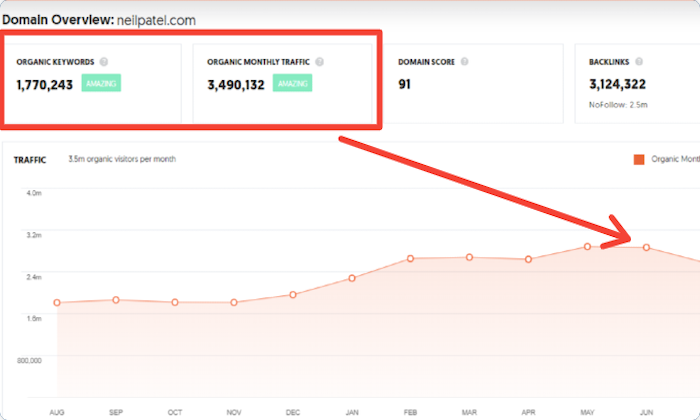
The result of doing this speaks for itself: 

Over 3 million visitors per month on this blog. All built from scratch.

Content was a huge part of this but the site wouldn’t be nearly as large without the right structure and technical SEO.

You can get access to this vast technical SEO expertise by working with the Neil Patel Digital team.

Today, we’ve developed a content marketing program with content structuring (in the form of content clusters) to help clients get technical SEO right from day one.

2. Webris – Best for Technical SEO Audits

Almost all great endeavors begin with taking in-depth audits of what’s already existing. 

Technical SEO is no exception. 

You won’t achieve much in your effort to optimize your site for search engine bots’ crawling and indexing without first doing a proper audit of your site’s structure. 

And Webris is the company we recommend for technical SEO audits.

If you a do quick Google search for “technical SEO audit,” you’ll find this excellent content piece by Webris:
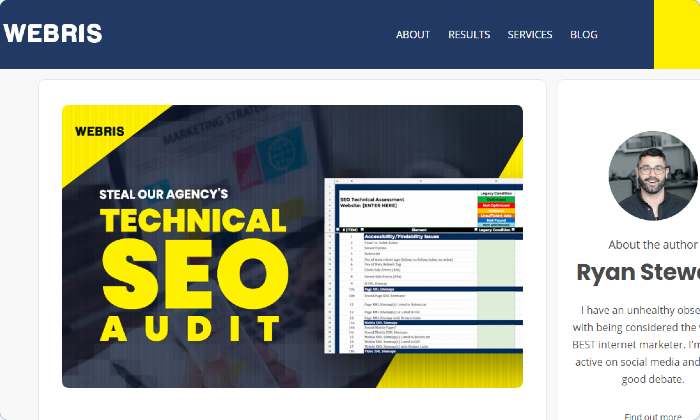
Ranking on Google’s top spot for this search term is another way of saying that earned its stripes on this list. 

No company can earn that by accident. 

This proves that Webris walks the talk when it comes to technical SEO audits and is a reliable option if you’re just getting started. 

Founded by Ryan Stewart, the core strengths of Webris is technical SEO audits and conversion-focused UX. This company boasts of an incredibly talented team of advanced technical SEO consultants. 

Major brands like Shopify and Accenture trust Webris and have worked with them.

3. Salt.agency – Best for Enterprise Technical SEO

Salt.agency prides itself on “Technical Excellence” and that’s for a good reason. This company breathes technical SEO before anything else:
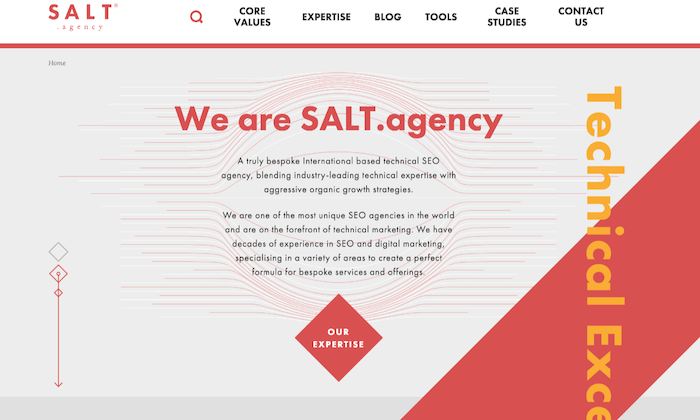
Massive enterprise sites can have all sort of crazy technical problems.

If you’re running one of these sites, you need a team that’s worked with that type of complexity before.

In this case, Salt.agency is the best option.

With offices in Boston, Leeds, and London, Salt.agency’s clients include Cloudflare, Hartley Botanic, Brex, Travel Supermarket, and many others.

4. Orainti – Best for Ecommerce Brands
Orainti specializes in providing technical and strategic SEO services for brands in competitive industries. 

This company approaches digital marketing and search engine optimization with a technical mindset, which justifies its inclusion in this highly-vetted list. 

And they work mostly with ecommerce brands selling internationally. 

International ecommerce businesses  have tons of unique challenges like dealing with multilingual sites, getting product and category pages ranked properly, and avoiding duplicate content. 

Orainti comes highly recommended for this.

Aleyda Solis is the Founder of Orainti. She is a veteran SEO practitioner, speaker, and author who has earned recognition and awards for her technical SEO expertise by organizations such as Forbes and European Search Awards. 

Orainti boasts an impressive portfolio of top brands, including Zillow, Under Armour, Sage, Eventbrite, and others.

5 Characteristics That Make a Great Technical SEO Company

What separates the good technical SEO shops from the great ones? What would you specifically look for when choosing someone to work with? 

Here’s what I look for.

1. A Complete Implementation Process that Includes Technical SEO

Technical SEO brings structure to your site. It helps search engine bots crawl, index, and rank your website correctly, which is essential for driving traffic. 

Also, it helps to boost your site’s load time. 

However, this doesn’t mean that once you have an excellent technical SEO, everything search engine optimization will fall in place automatically. 

The best technical SEO companies have a complete SEO program including manual site review, technical SEO implementation, content strategy, and others.

If you’re really good at SEO already and just need a quick SEO audit to double check everything, you could get value at working with a specialist. But for everyone else, I recommend working with someone that understands the complete SEO strategy. It’s the only way to build a site with tons of traffic.

2. Thought leadership

It takes lots of experimentation to implement technical SEO strategies that move the needle. Companies that embark on this kind of excruciating work always like to document their experience and findings.

Working with SEO thought leaders increases the odds of a successful project.

After all, if someone can successfully teach technical SEO, they can also help your business directly.

Publishing cutting-edge content about technical SEO is a great sign that they’ll deliver amazing results. 

3. An Impressive Client Portfolio

An excellent way to see if the expertise and processes used by a technical SEO company works is by looking at its client portfolio.

There is nuance here.

Having a ton of major brands is great. But that doesn’t mean that you can get help with your exact situation.

Ideally, the technical SEO company has worked with similar companies like your own.

4. Real Life Results

The nice thing about technical SEO is that it’s extremely practical. Technical problems come up that tanks traffic. Then technical SEO experts fix those problems.

It’s cut and dry.

Any great technical SEO company should have plenty of case studies where they turned around a site after it got hit. The more obscure the technical problem, the more likely they’ll be able to find weird problems on your own site.

Sometimes, these case studies are published on their site. But a lot of companies don’t like sharing the best stories. So ask their team as you talk to them. They should be able to give you plenty of examples during a call.

5. A Diversified Team

Covering every last technical SEO requirement is way too big of a task for a single person. You’ll need a fully-staffed team to do it all. Especially on major sites.

Go through the company’s team pages and LinkedIn employees, then look for lots of depth and expertise across the entire team.

What to Expect from a Great Technical SEO Company 

If you’re like most people who only realize the need for technical SEO late on, you’ll probably be wondering what you should expect from one. 

The most significant things to expect are what follows. 

1. A discovery session

After you reach out to a technical SEO company, they’ll want to get on a call to understand what you’re looking for. 

It’s the only way to understand the goals that you have for your site.

If a technical SEO company wants to jump straight into an audit without even getting on the phone, it’s a sign they’re running an “audit mill” and aren’t going to spend much time on your project.

Find a company that wants to go really deep and understand the full picture.

2. A one-time audit proposal

Most technically SEO companies will perform a one-time audit for a flat fee. 

Since this is a standard part of their practice, they can usually jump into this right away.

Assuming their fee works with your budget, you could have someone get started within a week. That’s how easy it is to get going.

Before starting the audit, ask them for everything that they’ll check. It should include everything like canonical problems, indexing issues, duplicate content, other Google Search Console errors, everything.

If the list doesn’t feel extremely comprehensive, get a few quotes from other companies.

3. Completing the audit

Once you’ve agreed to move forward with an audit, the company will get started.

These usually take a few weeks to complete, depending on the size of your site.

Of course, you’ll need to give them access to your Google Analytics, Google Search Console, WordPress account, and possibly your web host.

During the audit, there shouldn’t be much work for you or your team. The company performing the audit may have questions but they can do the vast majority of the work on their own.

4. Implementation proposal

Most technical SEO audits only include the discovery of site issues. The project doesn’t usually include the work that’s required to fix any problems.

This is because most problems don’t have easy fixes.

For example, if your site has terrible site speed that’s impacting your rankings, you’ll need to do a ton of front-end work in order to fix it. That will also involve your marketing team and possibly other agencies.

So once the audit is complete, expect to see a proposal that includes implementing any solutions.

Something to watch for here: a great technical SEO company will know the limits of it’s expertise. When they find problems outside their capabilities, they’ll tell you and advise you to work with someone else on fixing them. Site rebuilds and content marketing are good examples of this.

If a technical SEO agency tells you that it can fix every single problem, double check and make sure they truly have real expertise in those areas.

Should I take Technical SEO Seriously?

Yes!

Technical SEO is like the frame of your house. Only with good bones can your content and marketing drive traffic to your site. 

But, as things add up, and you have hundreds or thousands of pages on your site, something is going to break. 

Search engines have a harder time crawling your site, content isn’t indexed, and your site speed slows way down.

Even if you start with a great foundation, you need a healthy rebuild every few years.

If you haven’t done a deep technical SEO audit recently, now’s the time.

The post The 4 Best Technical SEO Companies of 2020 appeared first on Neil Patel.


from Blog – Neil Patel https://ift.tt/3pma8nL
via IFTTT

The 4 Best Technical SEO Companies of 2020

No matter how great the content on your website is, your hard work could amount to nothing without proper technical SEO. 

Technical SEO gives your site structure, makes it super easy for search engine bots to crawl and index, and helps Google understand what each page is about. 

URL structuring, robots.txt, redirect codes, canonical tags, .htaccess files, load time, and many others. It all matters.

Do all those things sound unfamiliar to you? No? 

Well, you don’t need to.

Tons of companies already know this stuff and it’s really easy to work with them.

That’s where this guide comes in. 

Our team at Neil Patel Digital researched, reviewed, and listed the top technical SEO companies on four criteria: 

  • Outstanding customer reviews.
  • Awards, impressive clientele, and a long history of delivering stellar technical SEO work.
  • Thought-leadership—consistently publishing of insightful articles and trends on the topic.
  • A strong reputation amongst other SEO professionals.

From these criteria, we found technical SEO companies you can trust and what they’re good for:

The 4 Top Technical SEO Companies in The World

  1. Neil Patel Digital – Best for Technical Content Structuring
  2. Webris – Best for Technical SEO Audits
  3. Salt.agency  – Best for Enterprise Technical SEO
  4. Orainti – Best for Ecommerce Brands

Without further ado, let’s dive into what makes us trust and bet our reputation on these companies. 

1. Neil Patel Digital – Best For Technical Content Structuring

It’s been touted over and again that content is king. While there’s truth in this, what most people never take into consideration is content structuring. 

Neil Patel Digital is the go-to SEO company for excellent content structuring.

Well, don’t take my word for it. Let me show you why. 

From our years of extensive search engine optimization experience, we found that for content marketing to work and power long-term SEO strategy, it must have the right structure. 

This is a key piece of our comprehensive SEO program.

And what have we to show for doing this, you ask? 

The result of doing this speaks for itself: 

Over 3 million visitors per month on this blog. All built from scratch.

Content was a huge part of this but the site wouldn’t be nearly as large without the right structure and technical SEO.

You can get access to this vast technical SEO expertise by working with the Neil Patel Digital team.

Today, we’ve developed a content marketing program with content structuring (in the form of content clusters) to help clients get technical SEO right from day one.

2. Webris – Best for Technical SEO Audits

Almost all great endeavors begin with taking in-depth audits of what’s already existing. 

Technical SEO is no exception. 

You won’t achieve much in your effort to optimize your site for search engine bots’ crawling and indexing without first doing a proper audit of your site’s structure. 

And Webris is the company we recommend for technical SEO audits.

If you a do quick Google search for “technical SEO audit,” you’ll find this excellent content piece by Webris:

Ranking on Google’s top spot for this search term is another way of saying that earned its stripes on this list. 

No company can earn that by accident. 

This proves that Webris walks the talk when it comes to technical SEO audits and is a reliable option if you’re just getting started. 

Founded by Ryan Stewart, the core strengths of Webris is technical SEO audits and conversion-focused UX. This company boasts of an incredibly talented team of advanced technical SEO consultants. 

Major brands like Shopify and Accenture trust Webris and have worked with them.

3. Salt.agency – Best for Enterprise Technical SEO

Salt.agency prides itself on “Technical Excellence” and that’s for a good reason. This company breathes technical SEO before anything else:

Massive enterprise sites can have all sort of crazy technical problems.

If you’re running one of these sites, you need a team that’s worked with that type of complexity before.

In this case, Salt.agency is the best option.

With offices in Boston, Leeds, and London, Salt.agency’s clients include Cloudflare, Hartley Botanic, Brex, Travel Supermarket, and many others.

4. Orainti – Best for Ecommerce Brands

Orainti specializes in providing technical and strategic SEO services for brands in competitive industries. 

This company approaches digital marketing and search engine optimization with a technical mindset, which justifies its inclusion in this highly-vetted list. 

And they work mostly with ecommerce brands selling internationally. 

International ecommerce businesses  have tons of unique challenges like dealing with multilingual sites, getting product and category pages ranked properly, and avoiding duplicate content. 

Orainti comes highly recommended for this.

Aleyda Solis is the Founder of Orainti. She is a veteran SEO practitioner, speaker, and author who has earned recognition and awards for her technical SEO expertise by organizations such as Forbes and European Search Awards. 

Orainti boasts an impressive portfolio of top brands, including Zillow, Under Armour, Sage, Eventbrite, and others.

5 Characteristics That Make a Great Technical SEO Company

What separates the good technical SEO shops from the great ones? What would you specifically look for when choosing someone to work with? 

Here’s what I look for.

1. A Complete Implementation Process that Includes Technical SEO

Technical SEO brings structure to your site. It helps search engine bots crawl, index, and rank your website correctly, which is essential for driving traffic. 

Also, it helps to boost your site’s load time. 

However, this doesn’t mean that once you have an excellent technical SEO, everything search engine optimization will fall in place automatically. 

The best technical SEO companies have a complete SEO program including manual site review, technical SEO implementation, content strategy, and others.

If you’re really good at SEO already and just need a quick SEO audit to double check everything, you could get value at working with a specialist. But for everyone else, I recommend working with someone that understands the complete SEO strategy. It’s the only way to build a site with tons of traffic.

2. Thought leadership

It takes lots of experimentation to implement technical SEO strategies that move the needle. Companies that embark on this kind of excruciating work always like to document their experience and findings.

Working with SEO thought leaders increases the odds of a successful project.

After all, if someone can successfully teach technical SEO, they can also help your business directly.

Publishing cutting-edge content about technical SEO is a great sign that they’ll deliver amazing results. 

3. An Impressive Client Portfolio

An excellent way to see if the expertise and processes used by a technical SEO company works is by looking at its client portfolio.

There is nuance here.

Having a ton of major brands is great. But that doesn’t mean that you can get help with your exact situation.

Ideally, the technical SEO company has worked with similar companies like your own.

4. Real Life Results

The nice thing about technical SEO is that it’s extremely practical. Technical problems come up that tanks traffic. Then technical SEO experts fix those problems.

It’s cut and dry.

Any great technical SEO company should have plenty of case studies where they turned around a site after it got hit. The more obscure the technical problem, the more likely they’ll be able to find weird problems on your own site.

Sometimes, these case studies are published on their site. But a lot of companies don’t like sharing the best stories. So ask their team as you talk to them. They should be able to give you plenty of examples during a call.

5. A Diversified Team

Covering every last technical SEO requirement is way too big of a task for a single person. You’ll need a fully-staffed team to do it all. Especially on major sites.

Go through the company’s team pages and LinkedIn employees, then look for lots of depth and expertise across the entire team.

What to Expect from a Great Technical SEO Company 

If you’re like most people who only realize the need for technical SEO late on, you’ll probably be wondering what you should expect from one. 

The most significant things to expect are what follows. 

1. A discovery session

After you reach out to a technical SEO company, they’ll want to get on a call to understand what you’re looking for. 

It’s the only way to understand the goals that you have for your site.

If a technical SEO company wants to jump straight into an audit without even getting on the phone, it’s a sign they’re running an “audit mill” and aren’t going to spend much time on your project.

Find a company that wants to go really deep and understand the full picture.

2. A one-time audit proposal

Most technically SEO companies will perform a one-time audit for a flat fee. 

Since this is a standard part of their practice, they can usually jump into this right away.

Assuming their fee works with your budget, you could have someone get started within a week. That’s how easy it is to get going.

Before starting the audit, ask them for everything that they’ll check. It should include everything like canonical problems, indexing issues, duplicate content, other Google Search Console errors, everything.

If the list doesn’t feel extremely comprehensive, get a few quotes from other companies.

3. Completing the audit

Once you’ve agreed to move forward with an audit, the company will get started.

These usually take a few weeks to complete, depending on the size of your site.

Of course, you’ll need to give them access to your Google Analytics, Google Search Console, WordPress account, and possibly your web host.

During the audit, there shouldn’t be much work for you or your team. The company performing the audit may have questions but they can do the vast majority of the work on their own.

4. Implementation proposal

Most technical SEO audits only include the discovery of site issues. The project doesn’t usually include the work that’s required to fix any problems.

This is because most problems don’t have easy fixes.

For example, if your site has terrible site speed that’s impacting your rankings, you’ll need to do a ton of front-end work in order to fix it. That will also involve your marketing team and possibly other agencies.

So once the audit is complete, expect to see a proposal that includes implementing any solutions.

Something to watch for here: a great technical SEO company will know the limits of it’s expertise. When they find problems outside their capabilities, they’ll tell you and advise you to work with someone else on fixing them. Site rebuilds and content marketing are good examples of this.

If a technical SEO agency tells you that it can fix every single problem, double check and make sure they truly have real expertise in those areas.

Should I take Technical SEO Seriously?

Yes!

Technical SEO is like the frame of your house. Only with good bones can your content and marketing drive traffic to your site. 

But, as things add up, and you have hundreds or thousands of pages on your site, something is going to break. 

Search engines have a harder time crawling your site, content isn’t indexed, and your site speed slows way down.

Even if you start with a great foundation, you need a healthy rebuild every few years.

If you haven’t done a deep technical SEO audit recently, now’s the time.

The post The 4 Best Technical SEO Companies of 2020 appeared first on Neil Patel.


from Blog – Neil Patel https://ift.tt/3pma8nL
via IFTTT

How to Use Quizzes in Your Marketing Strategy

quizzes in marketing

Using quizzes in your marketing strategy is one of the most underrated marketing moves.

Seriously. 

They are incredibly effective at generation leads, engaging your audience, and much more.

But, it isn’t enough for me to just convince you to implement quizzes in your marketing strategy, so I’m going to show you exactly how to create an effective quiz, how to distribute it, and how to follow it up with marketing automation.

At the end, we’ll cover several brands successfully using quizzes in their marketing strategy so you can walk away with a little more insight.

Part I: Creating Your Quiz

There’s more to a quiz than you might actually think. Did you know that six out of ten people only read a headline? That means we’re going to have to make a pretty good first impression, so let’s talk about the title first.

Title Selection & Quiz Types

The very first step to creating a quiz would be coming up with the title for it. Once you’ve got that down, you’re going to want to figure out what type of quiz you want to make.

Here are a few of the most common quiz titles;

  • The “Actually” Title: Believe it or not, adding the word “actually” can turn a simple question into a challenge. Compare “How much do you know about the Golden State Warriors” against “How much do you actually know about the Golden State Warriors” and you’ll see what we mean. No one likes to back down from a challenge, right?
  • “The Which (Blank) Are You?” Title: This one’s a classic. Due to our innate inquisitive nature, sometimes we just have to know which Marvel superhero we are before we die. It’s just one of those things we have to cross off our bucket list.
  • The “Celebrity Personality” Title: This is your typical personality quiz with the substitution of celebrities to give it that added pizazz. Because of the use of celebrities, they’re more likely to get someone’s attention sheerly through being starstruck.
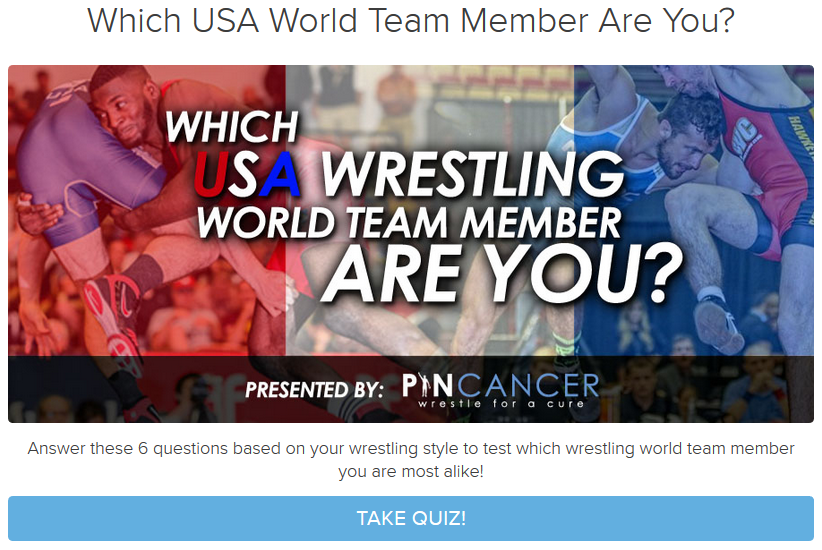
which-wrestling-team-mate-are-you-quiz

Choosing The Quiz Type

The quiz titles above will give you a few ideas of quiz types, but here’s a few more to consider:

  • The Personality Quiz – We like to hear good things about ourselves, so because of the “self-serving bias,” personality quizzes work so well. This type of quiz categorizes people into personalities that compliment them based on their answers. If you’re a brand that focuses on product sales, you could use a personality quiz to place individuals into categories with personalized product recommendations based on the answers they gave.
  • The Knowledge Test: The knowledge test simply challenges anyone’s knowledge on a given subject. You could ask your audience how much they know about your brand, the products it offers, or any of today’s trending topics.

Crafting Quiz Questions

Now that you’ve got a general idea of what kind of quiz you want to create along with a title to go with it, it’s time to bring it to life by filling it up with questions!

Here are some things to keep in mind when formulating your questions:

  • Infuse Personality into Your Quiz: Breathe some life into your quiz by injecting your personality into it. Approach your audience as if you were talking to them in person. Make your audience feel comfortable so that they’ll be more likely to opt-in later.
  • Use Images for Your Questions: There’s nothing wrong with having text-only questions, but don’t be afraid to use images either. Using pictures keeps things interesting and relevant, it also makes your quiz feel more like a trivia game.
  • Keep It Short: People don’t have the longest attention spans, so keep things simple and sweet. Aim between 6 to 10 questions for your quiz, in general, this will only take your audience about two to three minutes to complete.

Designing A Lead Capture: Do’s and Don’t’s

After coming up with the questions for your quiz, it’s time to create a lead capture form. The purpose of lead capture is to gather contact information so that you can grow an email list.

You can then follow these leads up through marketing automation, which we’ll get into later. For now, here are some helpful do’s and don’t’s you should follow when creating your lead capture:

Do: Incentivize Your Lead Capture Form

Give your audience a reason to provide you with their contact information. Offer incentives like a free eBook or an entry to a free giveaway. Standard incentives include infrequent updates about your brand or a weekly newsletter. Find what works best to encourage your audience to join your mailing list.

Don’t: Ask For Information You Won’t Use

What’s the point in asking your audience for their phone number if you aren’t going to call them? Make sure you only ask for information that your brand will use; the most basic being a first and last name, and an email address.

Otherwise, you risk annoying your audience and having them bounce from your quiz.

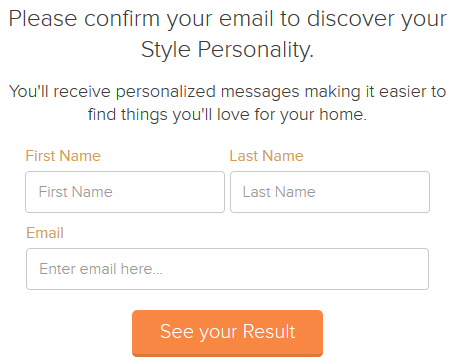
Do: Be Honest About Your Marketing Strategy

It won’t always be clear to your audience that after you get their contact information, you’ll be contacting them. It’s a good rule of thumb to let your audience know that you’ll be getting in touch with them soon, so don’t be all hush-hush about your marketing strategy.

Be honest with your audience. Give them a quick heads up about what’s to come, like this:

confirm-email-to-discover-style-personality-quiz

Creating Shareable Results

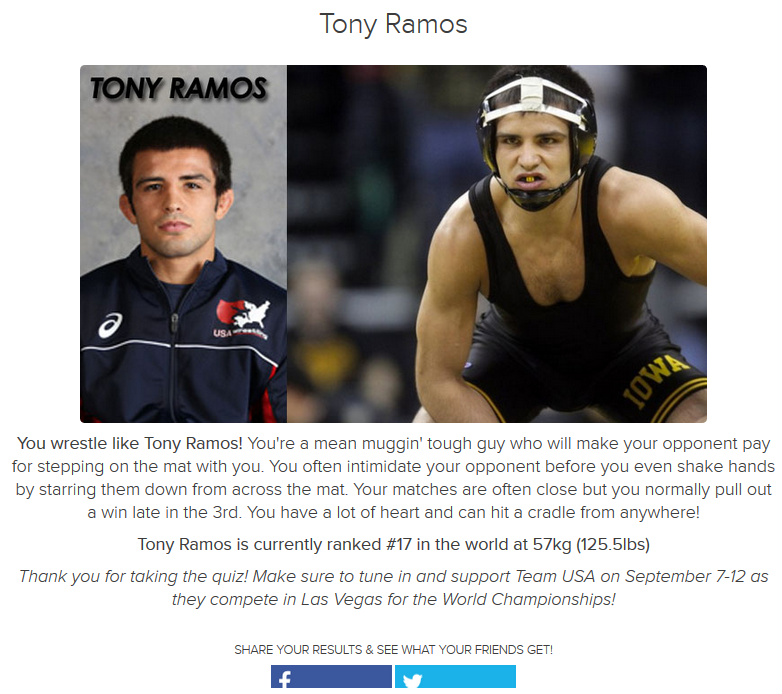
Now onto the results! This is the moment your audience has been waiting for. You want to make sure your results are something they’re going to like and share with others, so creating share-worthy results will be your priority.

Here are a couple of pointers that will help you create results worth sharing:

  • Be Honest and Positive: Positive emotions are more likely to promote sharing, so create results that compliment your audience into sharing what they got. At the same time, be honest with your results. Don’t tell your audience that they’re something they aren’t.
  • Use Share-Worthy Images: Just like how we used images for your questions, we’re going to want to make sure we use images for your results. This time around, you want to use some pretty interesting pictures; ones that are worth sharing. This is what’s going to attract attention when people share their results on social media.
  • Create A Call-To-Action: Don’t let your interaction with the audience end at the results. Provide a call-to-action for your audience. It can be something as simple as a link to your website, or maybe even personalized links to product recommendations.
tony-ramos-wreslter-quiz-result

Part II: Distributing Your Quiz

Now it’s time to put your quiz through the ultimate test by promoting it on social media. Your major outlets for social networks would be Facebook and Twitter, but if you wanted to take it a bit further, you can also use paid advertising on Facebook to give your quiz that extra boost.

Share Your Quiz on Facebook and Twitter

When sharing your quiz on Facebook or Twitter, be sure you check off each of these to get the most out of promoting your quiz:

  • Be sure to use an attractive image to represent your quiz.
  • Make sure you have a captivating headline for your quiz.
  • Share both the image and the caption with a shortened link to track results.
red-lobster-quiz-facebook-ad

Don’t Be Afraid to Use Paid Advertising on Facebook

The process of promoting your quiz through Facebook via paid advertising can be a fairly lengthy operation, so to save you guys some time, we’ve truncated the whole process into a more time-friendly summary.

  • Selecting Your Target Audience: You have your choices of selecting a target audience by location, demographics, behaviors, and connections. You can even break these categories down even further. Let’s take location for example. We can narrow down the location to country, state/province, city, and zip code. Why would we want to do this? Maybe your brand wants to target an audience within its immediate vicinity. We don’t know. It’s up to you how you want to set the parameters for your target audience. So give it a try.
  • Creating A Custom Audience: Creating a custom audience consists of working with a list you’ve uploaded ahead of time. Facebook then generates an audience based on that list of previous customers you’ve already worked with.

Part III: Marketing Automation Follow-Ups

Here’s the fun part: following up on the leads you’ve collected. With the help of marketing automation, this may not take as much effort on your end as you might’ve thought.

We’re going to follow-up on your leads the very moment people opt-in, and in the course of two weeks, we’re going to show you how to nurture these leads until you can finally convert them into paying customers.

Here’s a four-step sequence that your marketing automation email follow-ups should live and die by:

Thank Your Audience for Taking Your Quiz First

Immediately after someone opts-in, send him or her an email that telling them “Thank you for taking our quiz!” This will remind your audience that they’ve opted-in, and it’ll also help assert your brand. It’ll give people a head’s up that you’ll be getting in touch with them soon.

Encourage Your Audience to Retake Your Quiz

After a couple of days, we’re going to pick up where your audience left off: their quiz results. Inform your audience about the other results they could have gotten. This may prompt your audience to retake your quiz, and maybe to even share their new results.

This is the perfect transition from your “thank you” email to sending out different content.

Build Trust with Case Studies or Testimonials

After a week, now would be a good time to build trust between you and your leads. Introduce testimonials or customer case studies to familiarize your audience with your brand and what other people think about it. This not only makes your brand look good, but it also lets your audience get more comfortable with who your brand is and what it stands for.

Convert Your Leads into Paying Customers

After two weeks, it’s time to convert those leads. Your audience should be familiar with your brand by now. Use incentives, like a webinar signup or coupons and discounts to encourage your leads to buy into your brand.

The rest is up to you and your expertise in converting leads into customers. These marketing automation follow-ups did most of the work for you, so it’s your turn to close the deal.

Part IV: Examples of Quiz-Use in Every Industry

It’s time to take a quick look at several examples of brands from different industries and how they implemented quizzes in their marketing strategy. Seeing these examples should give you a solid foundation when it comes to considering the use of quizzes in your own marketing strategy.

Retail: Z Gallerie

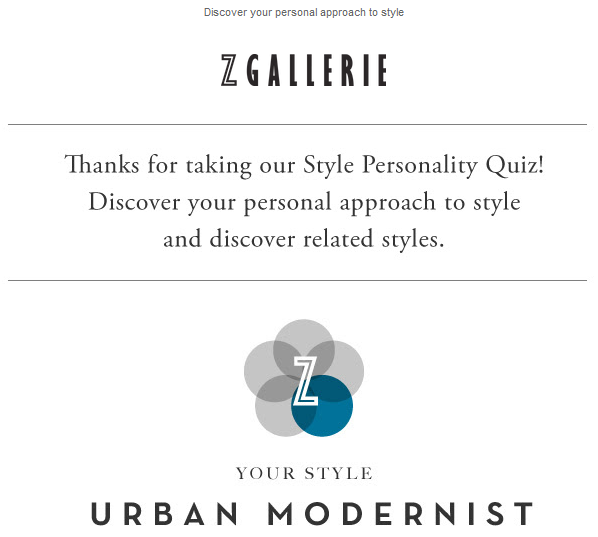
Z Gallerie is known for its commitment to providing furnishings, art, and accessories to both professional and amateur interior designers alike. They created the quiz “What is your Z Gallerie Style Personality?” to provide a personalized experience for every potential and current customer.

zgallerie-style-personality-quiz

Z Gallerie used a personality quiz as a way of bringing results that offered personalized product recommendations as a part of their marketing strategy. This method brought in a massive amount of leads per day which they followed-up with marketing automation.

It allowed Z Gallerie to continually recommend products tailored specifically to each person based on their individual quiz results. Now that’s online shopping done right.

Software: Cloud Sherpas

Cloud Sherpas specialized in cloud advisory and technology services for the world’s leading brands. (They’ve since been acquired by Accenture.)

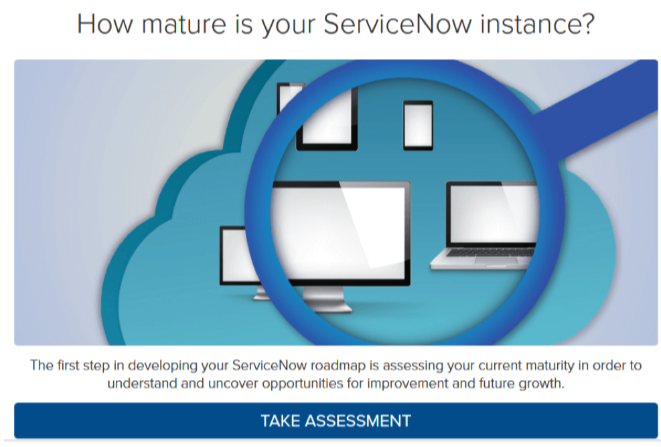
Cloud Sherpas used their quiz to gauge each individual’s level of maturity, which helped determine the more qualified leads for their marketing strategy. They also promoted their blog on Facebook with the quiz attached.

cloud sherpa marketing quizzes example

Cloud Sherpas’ quiz brings in 3-4 qualified leads a day. Nothing like quality over quantity, am I right?

Marketing: The Foundation

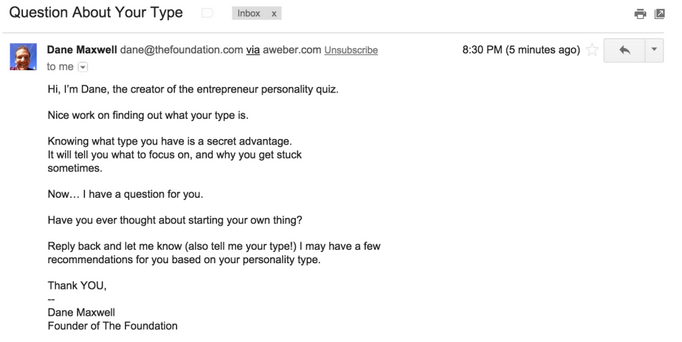
The Foundation focuses on building businesses with entrepreneurs through the idea of building backward. It’s an incredibly interesting concept, and with it, they created the quiz “Do You Have An Entrepreneurial Mind?” based on an existing eBook they had which covered the basic types of business owners.

The Foundation used a quiz in its marketing strategy by pairing it with a Facebook ad campaign. This combination was able to cut their cost per lead from $6.00 to $3.80, and collected over 16,000 leads and millions in revenue. That’s quite the turnout if you ask us.

question-about-your-type-email

Nonprofit: Pin Cancer

Pin Cancer’s call-to-action is the rallying of the US wrestling community to fight against, you guessed it: cancer. Their noble efforts have prompted the aid of their quiz “Which USA World Team Member Are You?” as a means of driving social traffic and raising awareness on cancer.

On a site that normally sees 200 visits per day, Pin Cancer had the best day ever when their quiz went up, driving social traffic up to 6,000 in a single day and bringing in 3,800 new email subscribers. Talk about turning the tables on cancer!

Conclusion

Who knew implementing quizzes into your online marketing strategy could be so effective? We’ve just covered a lot of material, but hopefully, you got a lot out of it.

Just to recap, we went over the entire quiz creation process, so you should be familiar with how to create your own quiz by now. Distributing your quiz will really put it to the test, but as soon as you generate those leads, you know exactly how to nurture them until conversion.

Don’t let quizzes fly under your radar any longer; try using them in your marketing strategy to see just how far your brand can get.

Have you used quizzes in your marketing strategy? What were the results? 

The post How to Use Quizzes in Your Marketing Strategy appeared first on Neil Patel.


from Blog – Neil Patel https://ift.tt/3nop0jG
via IFTTT

How to Use Quizzes in Your Marketing Strategy

quizzes in marketing

Using quizzes in your marketing strategy is one of the most underrated marketing moves.

Seriously. 

They are incredibly effective at generation leads, engaging your audience, and much more.

But, it isn’t enough for me to just convince you to implement quizzes in your marketing strategy, so I’m going to show you exactly how to create an effective quiz, how to distribute it, and how to follow it up with marketing automation.

At the end, we’ll cover several brands successfully using quizzes in their marketing strategy so you can walk away with a little more insight.

Part I: Creating Your Quiz

There’s more to a quiz than you might actually think. Did you know that six out of ten people only read a headline? That means we’re going to have to make a pretty good first impression, so let’s talk about the title first.

Title Selection & Quiz Types

The very first step to creating a quiz would be coming up with the title for it. Once you’ve got that down, you’re going to want to figure out what type of quiz you want to make.

Here are a few of the most common quiz titles;

  • The “Actually” Title: Believe it or not, adding the word “actually” can turn a simple question into a challenge. Compare “How much do you know about the Golden State Warriors” against “How much do you actually know about the Golden State Warriors” and you’ll see what we mean. No one likes to back down from a challenge, right?
  • “The Which (Blank) Are You?” Title: This one’s a classic. Due to our innate inquisitive nature, sometimes we just have to know which Marvel superhero we are before we die. It’s just one of those things we have to cross off our bucket list.
  • The “Celebrity Personality” Title: This is your typical personality quiz with the substitution of celebrities to give it that added pizazz. Because of the use of celebrities, they’re more likely to get someone’s attention sheerly through being starstruck.
which-wrestling-team-mate-are-you-quiz

Choosing The Quiz Type

The quiz titles above will give you a few ideas of quiz types, but here’s a few more to consider:

  • The Personality Quiz – We like to hear good things about ourselves, so because of the “self-serving bias,” personality quizzes work so well. This type of quiz categorizes people into personalities that compliment them based on their answers. If you’re a brand that focuses on product sales, you could use a personality quiz to place individuals into categories with personalized product recommendations based on the answers they gave.
  • The Knowledge Test: The knowledge test simply challenges anyone’s knowledge on a given subject. You could ask your audience how much they know about your brand, the products it offers, or any of today’s trending topics.

Crafting Quiz Questions

Now that you’ve got a general idea of what kind of quiz you want to create along with a title to go with it, it’s time to bring it to life by filling it up with questions!

Here are some things to keep in mind when formulating your questions:

  • Infuse Personality into Your Quiz: Breathe some life into your quiz by injecting your personality into it. Approach your audience as if you were talking to them in person. Make your audience feel comfortable so that they’ll be more likely to opt-in later.
  • Use Images for Your Questions: There’s nothing wrong with having text-only questions, but don’t be afraid to use images either. Using pictures keeps things interesting and relevant, it also makes your quiz feel more like a trivia game.
  • Keep It Short: People don’t have the longest attention spans, so keep things simple and sweet. Aim between 6 to 10 questions for your quiz, in general, this will only take your audience about two to three minutes to complete.

Designing A Lead Capture: Do’s and Don’t’s

After coming up with the questions for your quiz, it’s time to create a lead capture form. The purpose of lead capture is to gather contact information so that you can grow an email list.

You can then follow these leads up through marketing automation, which we’ll get into later. For now, here are some helpful do’s and don’t’s you should follow when creating your lead capture:

Do: Incentivize Your Lead Capture Form

Give your audience a reason to provide you with their contact information. Offer incentives like a free eBook or an entry to a free giveaway. Standard incentives include infrequent updates about your brand or a weekly newsletter. Find what works best to encourage your audience to join your mailing list.

Don’t: Ask For Information You Won’t Use

What’s the point in asking your audience for their phone number if you aren’t going to call them? Make sure you only ask for information that your brand will use; the most basic being a first and last name, and an email address.

Otherwise, you risk annoying your audience and having them bounce from your quiz.

Do: Be Honest About Your Marketing Strategy

It won’t always be clear to your audience that after you get their contact information, you’ll be contacting them. It’s a good rule of thumb to let your audience know that you’ll be getting in touch with them soon, so don’t be all hush-hush about your marketing strategy.

Be honest with your audience. Give them a quick heads up about what’s to come, like this:

confirm-email-to-discover-style-personality-quiz

Creating Shareable Results

Now onto the results! This is the moment your audience has been waiting for. You want to make sure your results are something they’re going to like and share with others, so creating share-worthy results will be your priority.

Here are a couple of pointers that will help you create results worth sharing:

  • Be Honest and Positive: Positive emotions are more likely to promote sharing, so create results that compliment your audience into sharing what they got. At the same time, be honest with your results. Don’t tell your audience that they’re something they aren’t.
  • Use Share-Worthy Images: Just like how we used images for your questions, we’re going to want to make sure we use images for your results. This time around, you want to use some pretty interesting pictures; ones that are worth sharing. This is what’s going to attract attention when people share their results on social media.
  • Create A Call-To-Action: Don’t let your interaction with the audience end at the results. Provide a call-to-action for your audience. It can be something as simple as a link to your website, or maybe even personalized links to product recommendations.
tony-ramos-wreslter-quiz-result

Part II: Distributing Your Quiz

Now it’s time to put your quiz through the ultimate test by promoting it on social media. Your major outlets for social networks would be Facebook and Twitter, but if you wanted to take it a bit further, you can also use paid advertising on Facebook to give your quiz that extra boost.

Share Your Quiz on Facebook and Twitter

When sharing your quiz on Facebook or Twitter, be sure you check off each of these to get the most out of promoting your quiz:

  • Be sure to use an attractive image to represent your quiz.
  • Make sure you have a captivating headline for your quiz.
  • Share both the image and the caption with a shortened link to track results.
red-lobster-quiz-facebook-ad

Don’t Be Afraid to Use Paid Advertising on Facebook

The process of promoting your quiz through Facebook via paid advertising can be a fairly lengthy operation, so to save you guys some time, we’ve truncated the whole process into a more time-friendly summary.

  • Selecting Your Target Audience: You have your choices of selecting a target audience by location, demographics, behaviors, and connections. You can even break these categories down even further. Let’s take location for example. We can narrow down the location to country, state/province, city, and zip code. Why would we want to do this? Maybe your brand wants to target an audience within its immediate vicinity. We don’t know. It’s up to you how you want to set the parameters for your target audience. So give it a try.
  • Creating A Custom Audience: Creating a custom audience consists of working with a list you’ve uploaded ahead of time. Facebook then generates an audience based on that list of previous customers you’ve already worked with.

Part III: Marketing Automation Follow-Ups

Here’s the fun part: following up on the leads you’ve collected. With the help of marketing automation, this may not take as much effort on your end as you might’ve thought.

We’re going to follow-up on your leads the very moment people opt-in, and in the course of two weeks, we’re going to show you how to nurture these leads until you can finally convert them into paying customers.

Here’s a four-step sequence that your marketing automation email follow-ups should live and die by:

Thank Your Audience for Taking Your Quiz First

Immediately after someone opts-in, send him or her an email that telling them “Thank you for taking our quiz!” This will remind your audience that they’ve opted-in, and it’ll also help assert your brand. It’ll give people a head’s up that you’ll be getting in touch with them soon.

Encourage Your Audience to Retake Your Quiz

After a couple of days, we’re going to pick up where your audience left off: their quiz results. Inform your audience about the other results they could have gotten. This may prompt your audience to retake your quiz, and maybe to even share their new results.

This is the perfect transition from your “thank you” email to sending out different content.

Build Trust with Case Studies or Testimonials

After a week, now would be a good time to build trust between you and your leads. Introduce testimonials or customer case studies to familiarize your audience with your brand and what other people think about it. This not only makes your brand look good, but it also lets your audience get more comfortable with who your brand is and what it stands for.

Convert Your Leads into Paying Customers

After two weeks, it’s time to convert those leads. Your audience should be familiar with your brand by now. Use incentives, like a webinar signup or coupons and discounts to encourage your leads to buy into your brand.

The rest is up to you and your expertise in converting leads into customers. These marketing automation follow-ups did most of the work for you, so it’s your turn to close the deal.

Part IV: Examples of Quiz-Use in Every Industry

It’s time to take a quick look at several examples of brands from different industries and how they implemented quizzes in their marketing strategy. Seeing these examples should give you a solid foundation when it comes to considering the use of quizzes in your own marketing strategy.

Retail: Z Gallerie

Z Gallerie is known for its commitment to providing furnishings, art, and accessories to both professional and amateur interior designers alike. They created the quiz “What is your Z Gallerie Style Personality?” to provide a personalized experience for every potential and current customer.

zgallerie-style-personality-quiz

Z Gallerie used a personality quiz as a way of bringing results that offered personalized product recommendations as a part of their marketing strategy. This method brought in a massive amount of leads per day which they followed-up with marketing automation.

It allowed Z Gallerie to continually recommend products tailored specifically to each person based on their individual quiz results. Now that’s online shopping done right.

Software: Cloud Sherpas

Cloud Sherpas specialized in cloud advisory and technology services for the world’s leading brands. (They’ve since been acquired by Accenture.)

Cloud Sherpas used their quiz to gauge each individual’s level of maturity, which helped determine the more qualified leads for their marketing strategy. They also promoted their blog on Facebook with the quiz attached.

cloud sherpa marketing quizzes example

Cloud Sherpas’ quiz brings in 3-4 qualified leads a day. Nothing like quality over quantity, am I right?

Marketing: The Foundation

The Foundation focuses on building businesses with entrepreneurs through the idea of building backward. It’s an incredibly interesting concept, and with it, they created the quiz “Do You Have An Entrepreneurial Mind?” based on an existing eBook they had which covered the basic types of business owners.

The Foundation used a quiz in its marketing strategy by pairing it with a Facebook ad campaign. This combination was able to cut their cost per lead from $6.00 to $3.80, and collected over 16,000 leads and millions in revenue. That’s quite the turnout if you ask us.

question-about-your-type-email

Nonprofit: Pin Cancer

Pin Cancer’s call-to-action is the rallying of the US wrestling community to fight against, you guessed it: cancer. Their noble efforts have prompted the aid of their quiz “Which USA World Team Member Are You?” as a means of driving social traffic and raising awareness on cancer.

On a site that normally sees 200 visits per day, Pin Cancer had the best day ever when their quiz went up, driving social traffic up to 6,000 in a single day and bringing in 3,800 new email subscribers. Talk about turning the tables on cancer!

Conclusion

Who knew implementing quizzes into your online marketing strategy could be so effective? We’ve just covered a lot of material, but hopefully, you got a lot out of it.

Just to recap, we went over the entire quiz creation process, so you should be familiar with how to create your own quiz by now. Distributing your quiz will really put it to the test, but as soon as you generate those leads, you know exactly how to nurture them until conversion.

Don’t let quizzes fly under your radar any longer; try using them in your marketing strategy to see just how far your brand can get.

Have you used quizzes in your marketing strategy? What were the results? 

The post How to Use Quizzes in Your Marketing Strategy appeared first on Neil Patel.


from Blog – Neil Patel https://ift.tt/3nop0jG
via IFTTT